Blocked Drains
Blocked Drains in Sydney: What Every Homeowner Should Know
Blocked drains are the most common plumbing job in Sydney. They happen in old homes and new ones. They happen with trees on the property and without. And in almost every case, the warning signs were there well before the toilet overflowed or the sewage backed up.
This guide is written by Prolific Plumbing. The team deals with blocked drains across Sydney every day. Everything here comes directly from real jobs, real situations and real pricing.
What you will find in this guide:
- The most common causes of blocked drains in Sydney homes
- Early warning signs that most people ignore until it is too late
- What happens when a small blockage turns into a big repair
- Health and safety risks of sewage overflow
- What actually works for DIY, and what does not
- How professionals diagnose and fix blocked drains
- Who is responsible: you or Sydney Water
- Prevention habits that stop most blockages from ever happening
- Real costs, with no surprises
Enquire Now
What Causes Blocked Drains in Sydney Homes?
Tree roots: the number one cause in Sydney
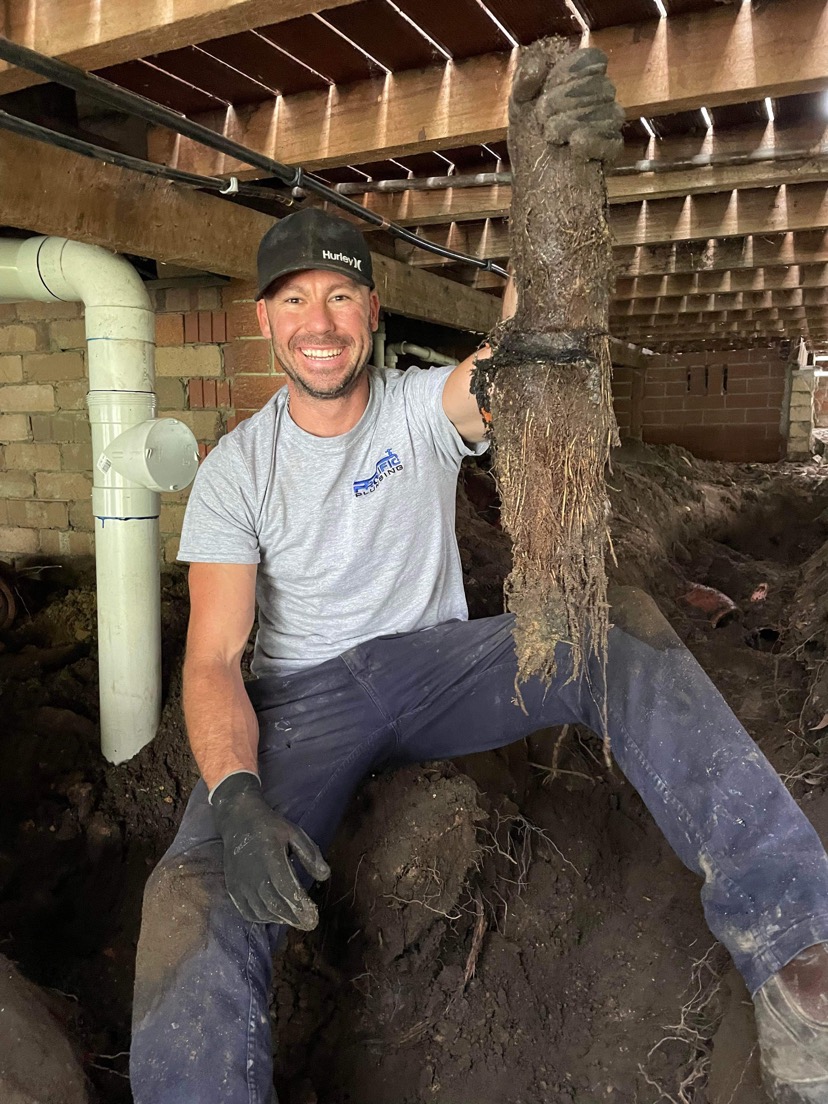
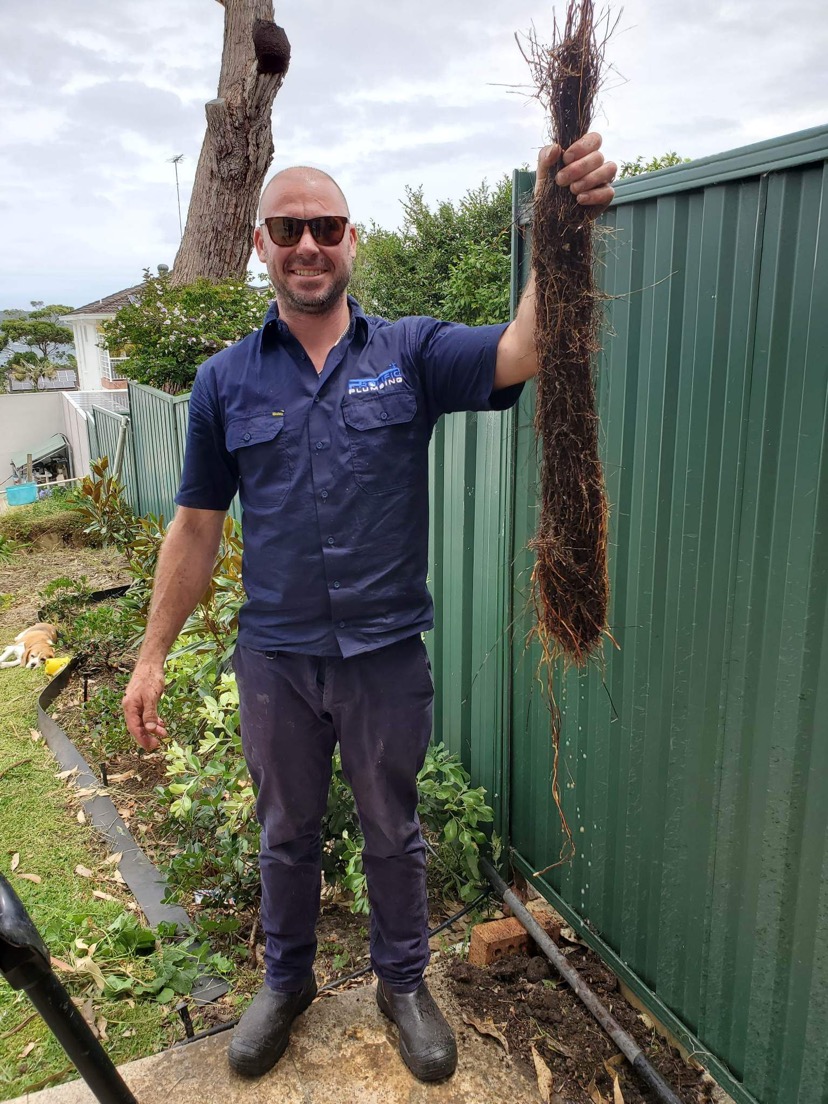
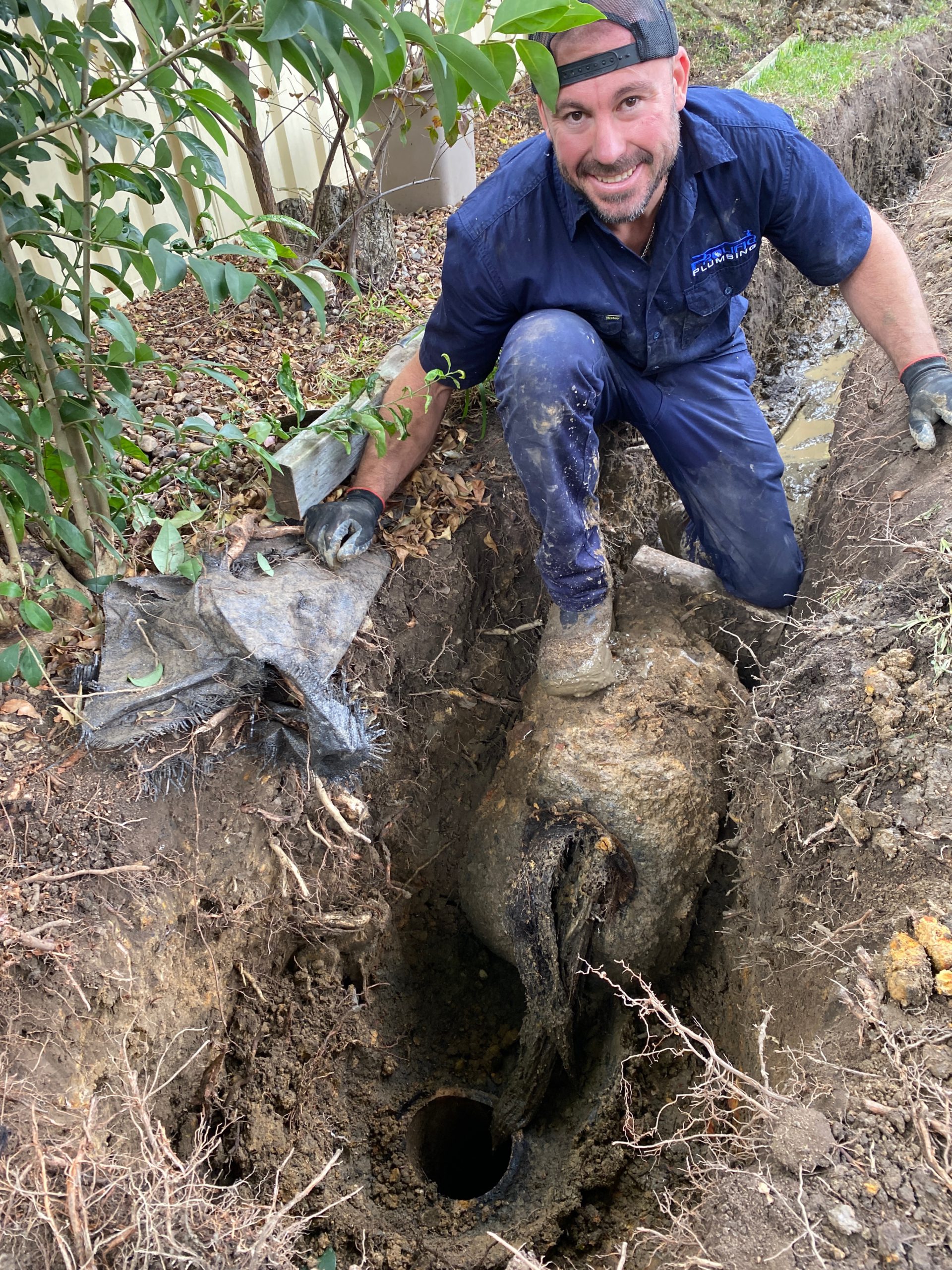
The most common cause of blocked drains we see, especially in Sydney’s leafy suburbs, is tree roots. As Matthew McQueen explains it, it is very leafy with lots of trees in our local area, and a lot of people end up with roots in the drains.
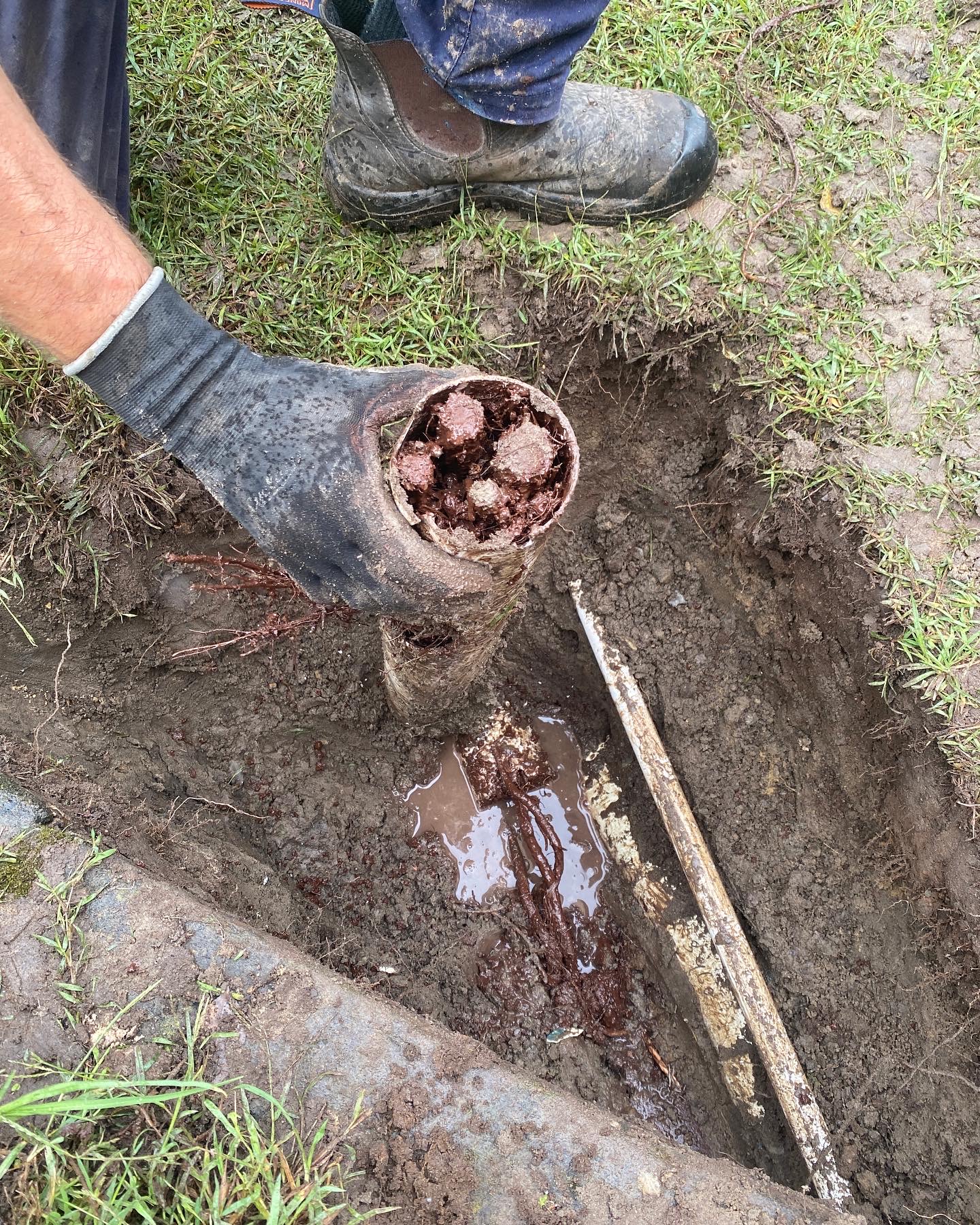
Many Sydney homes still have old earthen clay pipes underground. These pipes develop cracks over time. Tree roots are always searching for water, and they find those cracks straight away. Once inside, they grow, shift the pipes, crack them further, and cause damage that compounds burstover time.
Depending on how far the damage has gone, it is either a pipe relining job, where a new pipe is built inside the damaged one, or a full dig-up and replacement. That is why it is always best for homeowners to contact a plumber as soon as they start having drainage problems and not let things grow worse.
How do tree roots actually get into underground pipes?
Roots do not break through solid pipe. They find existing weaknesses: a small crack in an older clay pipe, a joint that has shifted slightly, or a section that has moved under ground pressure. Once a root tip finds moisture escaping from a crack, it pushes through.
Inside the pipe, it branches and grows. It pulls in more water. It forces the crack wider. Over months and years, what started as a hairline crack becomes a fractured or partially collapsed pipe with roots throughout.
And it is not just drainage pipes at risk. Matthew has photographed a thick tree root that had completely wrapped itself around a copper pipe carrying the main water supply into a house. It grew around it slowly, strangled it, made a pinhole, and eventually the pipe burst. Most homeowners have no idea this is happening underground until something fails.
What people regularly put down drains that cause serious blockages
Flushable wipes
Flushable wipes are not flushable. Even if there are only minor roots or cracks in the pipes, these wipes do not deteriorate. They do not break down like toilet paper, and they just slowly build up and cause a big blockage.
Prolific Plumbing has the footage to prove it. On their Instagram and TikTok you can watch Matt unblocking a drain and pulling out flushable wipes completely intact, sitting right next to toilet paper that has fully disintegrated. You can barely see the toilet paper, just dots. The wipes are still whole.
Toilet bowl fresheners
Those scented fresheners that hang inside the toilet bowl fall in constantly. Someone flushes, and they go through. They get in a funny position and get stuck. They do not need any root intrusion or existing damage to cause a full blockage. They will block a perfectly good pipe entirely on their own.
Fat, grease, oil, rice and flour
These are the kitchen drain killers. Even if you let the oil cool down first, when you run hot water through the pipe later, it heats back up and goes hard inside. There is no safe way to pour oil down a drain.
Rice and flour are just as bad. As Matthew puts it, have you ever mixed flour in a cup of water? It just clogs. When he was growing up, they used to make piñatas by cooking flour and water into a paste, painting it over a balloon and letting it set rock-hard. Put that in your drain, and it is going to cause problems. Rice expands with water and does the same thing.
Matthew’s tip for kitchen fat and oil:
Get a piece of foil, crinkle it up into a little bowl, pour your fat or oil in, let it harden, then throw it in the bin. Even if the oil is cool when you pour it down the sink, running hot water through it later heats it back up, and it goes cold and hard inside the pipe. The foil trick costs nothing and prevents the build-up entirely.
Kids and foreign objects
Families with young children will recognise this one. Toys flushed down toilets are a regular call-out for Prolific Plumbing. If you have young kids and are having recurring toilet issues, bathroom door locks are worth considering.
Builder rubble in new homes
It is not just older homes. New builds get blocked drains too, and it is usually because other trades have thrown things down the pipes during construction. Broken tiles, rubble and building waste get tossed into drains and left there. The result is showers that fill up, smelly drains and blockages in a brand new home. If you have moved into a new build and are already having drainage issues, this is often the cause.
Why do some homes have recurring blocked drain problems even after the blockage is cleared?
Because clearing the blockage is not the same as fixing the problem. As Matthew puts it: they are just band-aiding it. They need a plumber to stick the camera down their drains and find out why they are having those issues. Not just unblocking it and going, oh yeah, all done. You need to find out why.
Prolific Plumbing had one customer who had them coming back every eight months to jet blast the same drain. When the team first arrived, they identified the actual cause and quoted to fix it. The customer chose not to do the repair. By the time they eventually sold the house without fixing it, all those jet blasts had already cost more than the repair would have from day one.
This is also a common situation for new property owners. Prolific Plumbing regularly gets calls from people who have just bought a place and are already dealing with major drainage problems. The previous owners had been clearing the same blockage for years. That is why a pre-purchase plumbing inspection is just as important as a building or pest inspection, especially on older homes.
Early Warning Signs of a Blocked Drain
Why do some homes have recurring blocked drain problems even after the blockage is cleared?
The signs are usually there well before a drain fully blocks. People just do not always act on them. The most common early indicators are:
- Slow-draining sinks, showers or bathtubs
- Gurgling sounds from pipes or the toilet
- Toilets flushing more slowly than usual
- Sinks filling up rather than draining away
- Unusual smells coming from drains
Any one of these is your drain telling you something is building up. The sooner you get it looked at, the cheaper it will be to fix.
Warning signs people ignore until the situation becomes a real mess
The slow drain and the gurgling are the two most commonly ignored signs. By the time most people call, they are already describing a toilet that has pretty much overflowed. That would not have happened straight away. All the signs were there first.
Matthew McQueen, Prolific Plumbing
Acting early saves you money
A jet blast and camera inspection during business hours costs $760. The same job as an after-hours emergency call-out costs $908 or more, before root cutting is even added. Acting on the early warning signs could save you $500 or more.
Signs outside the home that indicate a deeper blockage
Most Sydney backyards have an overflow gully, a drain designed to be the first release point when sewage backs up in the system. If you notice a sewage smell near this gully, something is already backing up further down the line.
Do not brush it off as a general outdoor smell. That overflow gully spilling or smelling means the blockage is already underway. Call a plumber before it comes inside.
When a Small Blockage Becomes a Big Problem
One of the most common ways a simple blockage becomes a much bigger job is when the home has no inspection openings in the pipes. A toilet has a minor blockage, which would normally be a straightforward jet blast. But if there is no inspection opening, the only way to get the jet blaster into the line is to remove the toilet entirely. Then you are paying for the blockage clearance plus the removal and reinstallation of the toilet on top.
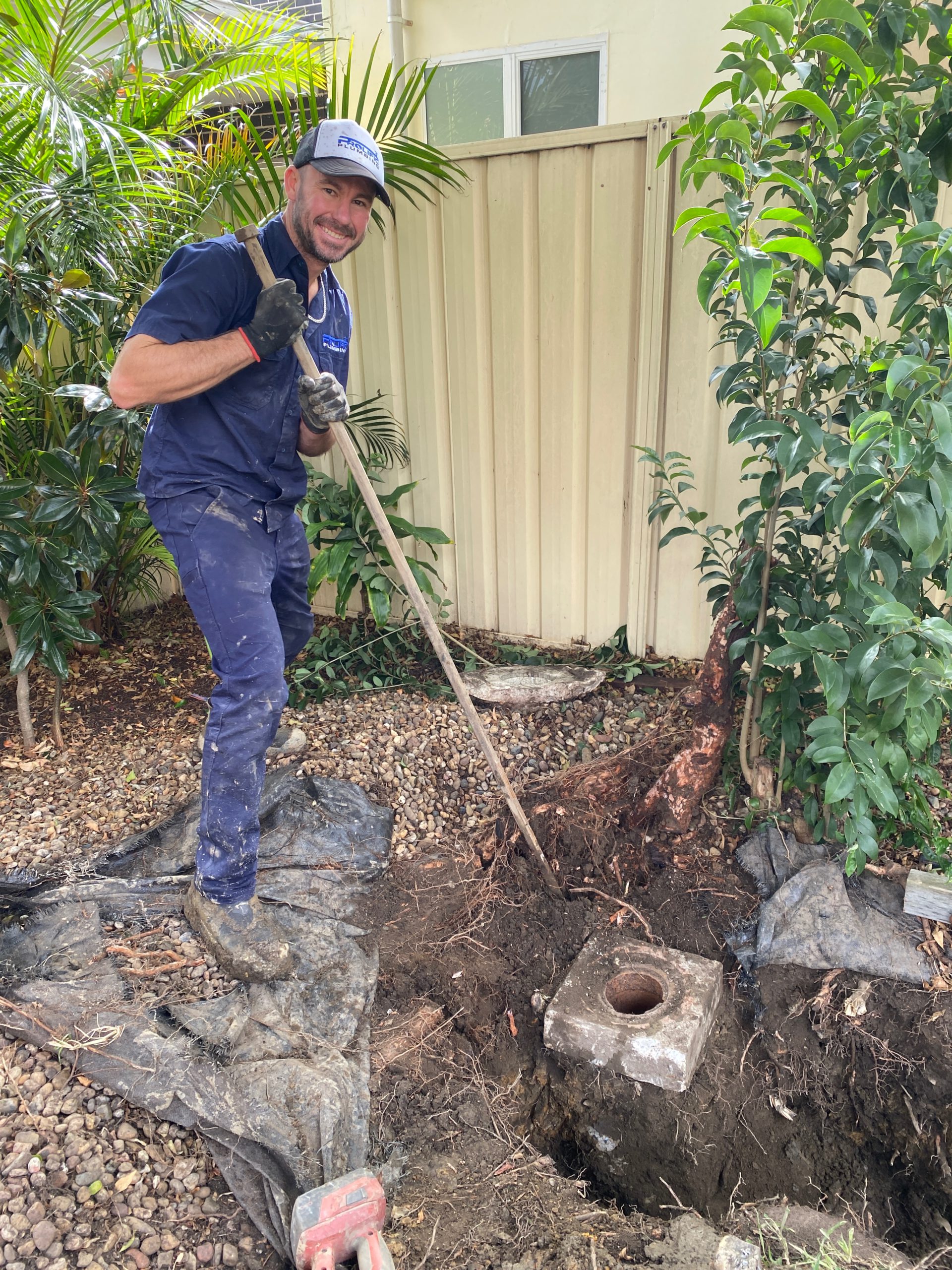
You can actually check for inspection openings yourself. In the backyard, look for a white cap in the ground, sometimes in the grass, sometimes set into a pathway. Under the house, you will see the pipe running straight with a T-shaped fitting and a cap you can unscrew. That is the access point for the plumber. If your home does not have one and the drainage runs under the house, a plumber can cut the pipe and install one.
Once a camera goes down, what is found often surprises homeowners. Common discoveries include:
- Tree root intrusion more advanced than expected. Most homeowners do not realise how damaging roots can be to pipes until they see it on camera.
- Pipes installed with backfall. Instead of the water draining away, it just sits back in the pipe and does not get away. This is usually the result of plumbing that was not done to code, whether DIY or an unqualified handyman.
- Missing inspection openings. The property has never had accessible entry points, making every future clearance job more expensive.
- Faulty reflux valves. A reflux valve is a rubber flap inside the pipe that lets water flow one way but stops it coming back. When it fails, the property is exposed to backflow from Sydney Water’s main line.
- Pipes shifted and creating a lip. When a pipe shifts even slightly, it creates an edge inside the pipe that catches debris. Things that would otherwise flow through get stuck on it and build up.
The most immediate result is sewage overflowing through the property. Usually this starts outside, through the overflow gully. That is the first place sewage spills out and pours everywhere when a blockage is bad enough. Once it reaches that point, it can back up inside the home through the toilet if the blockage is not cleared quickly.
Another type of damage that often goes unnoticed until something fails: pipes running under driveways. When heavy loads or trucks drive over a driveway, the weight can collapse onto the pipe beneath. Most homeowners never think about this until a blockage or overflow makes the damage visible.
The worst call-outs are always sewage overflows. A few weeks ago Matt was called out at 10 o’clock at night because the area under the house was completely flooded and the toilet had backed up. Just the night before writing this, he was at another blocked toilet job at 8:30pm, crawling under the house to do a jet blast through the inspection opening.
One of the most unusual situations the team has dealt with involved a faulty reflux valve and a blockage in Sydney Water’s main line happening at the same time. Sydney Water’s blockage backed up into the property and came out through the toilet inside the home. The reflux valve on the property had a fault and was not closing. If it had been working, Sydney Water’s blockage would have stopped at the valve. Because it was open, the sewage backed all the way up through the toilet.
The property owner was responsible because it was their faulty valve. Matt had to dig all the way down in the backyard to find the pipes, repair the reflux valve, and install an inspection opening while he was there. A pre-purchase plumbing inspection would have caught the faulty valve before it became a problem.
Health and Safety Risks of Blocked Drains
What to do immediately if sewage is overflowing
Do not try to manage it yourself. Call a plumber and get them out as soon as possible. Keep children and pets away from the affected area. When the team arrives, the jet blaster clears the blockage and cleans up the area at the same time. You do not need to do anything beforehand.
What health risks does sewage overflow create?
When a blocked drain leads to sewage overflow, whether inside the home or in the backyard, you are dealing with raw sewage. It is simply unsanitary. If you have kids running around the backyard, they are running around in it. That is a genuine health risk, not just an unpleasant situation.
Inside the home, a toilet that backs up means sewage on floors and surfaces. The risk is not just from direct contact. Bacteria from sewage can spread to areas well beyond where the overflow actually occurred.
DIY Attempts and Common Mistakes
When homeowners try to fix a blocked drain themselves
For a basic blockage, there is not much a homeowner can do to make things significantly worse. Even trying to push a hose down the pipe will not cause further damage, though it will not fix the problem either. Trying to flush more material through to push the blockage out is the one thing that will make it worse, as it just moves the problem further down the line.
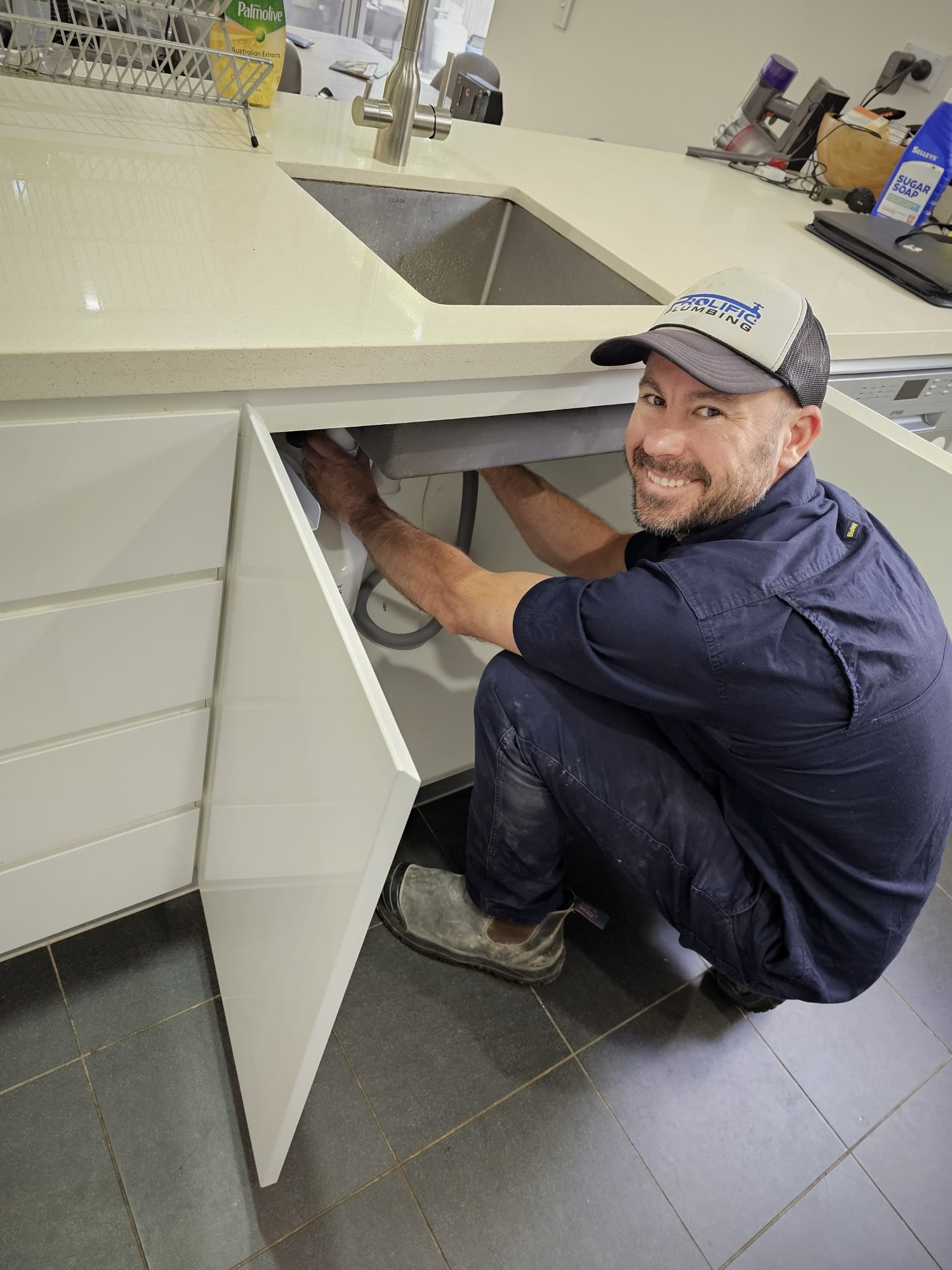
Where serious damage happens is when homeowners go further than drain clearing. Prolific Plumbing had a customer this year who tried to change the stop valve under their kitchen sink. They twisted the copper pipe inside the wall. Water burst out everywhere. They had to shut the water off at the meter and call the team. By the time the wall was opened, the copper pipe repaired, the new valve installed and everything reconnected, the job came to around $1,000. It is cheaper just to call the plumber the first time.
For basic kitchen drain blockages, it is worth trying a plunger first. But for anything involving toilets or showers, just get a plumber. The risk of making it worse is too high, and the cost of a DIY mistake can easily exceed $1,000.
Do baking soda, vinegar, boiling water or chemical cleaners actually work?
At what point should you stop DIY and call a professional?
How Professionals Fix Blocked Drains
The diagnosis and repair process
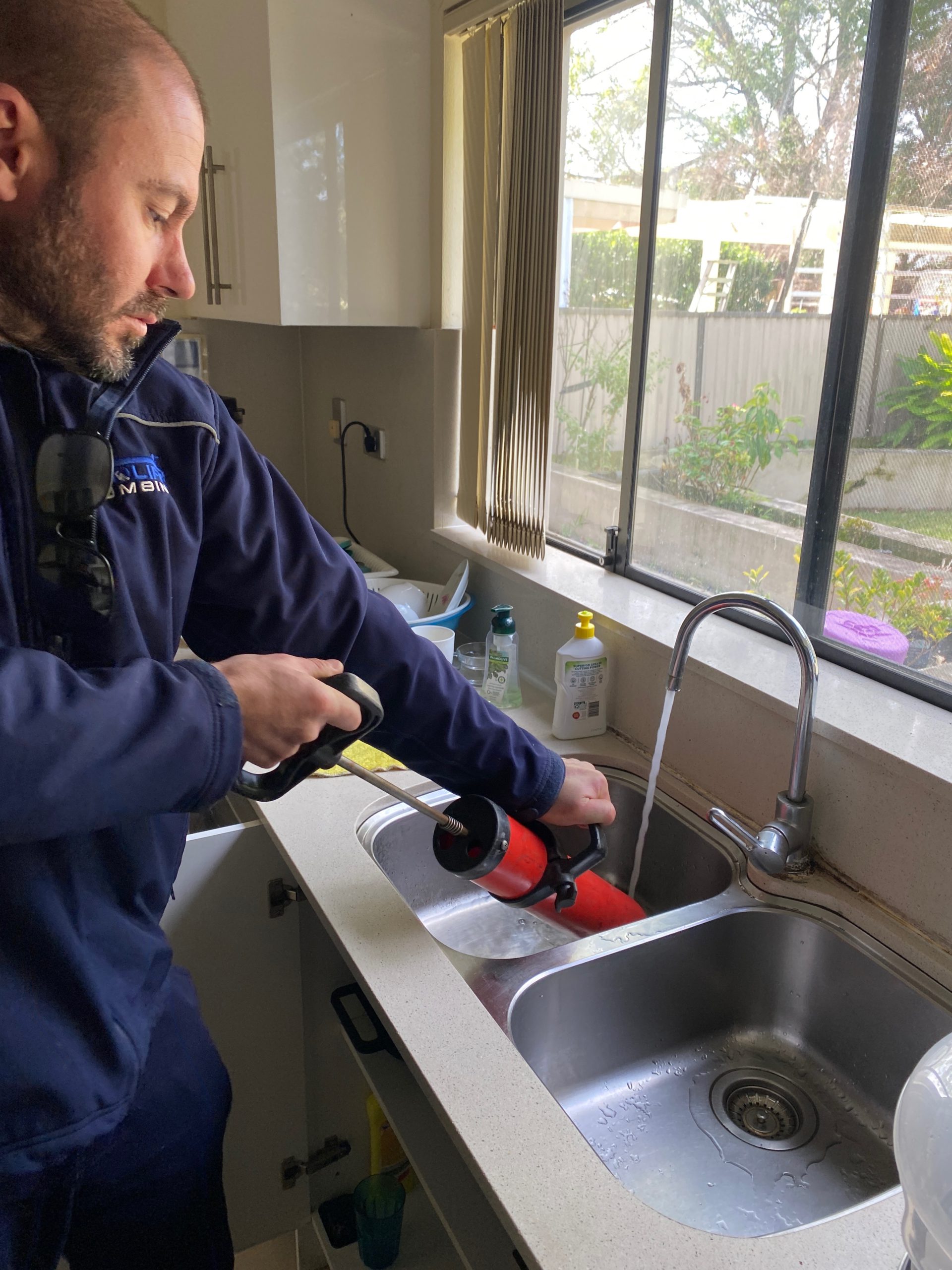
Every blockage is different, so the process depends on what is being dealt with. For a basic blockage in a basin, shower or toilet, just toilet paper or hair, Matt will often start with a plunger or a roe pump. A roe pump can easily suck out a simple blockage without needing any further equipment.
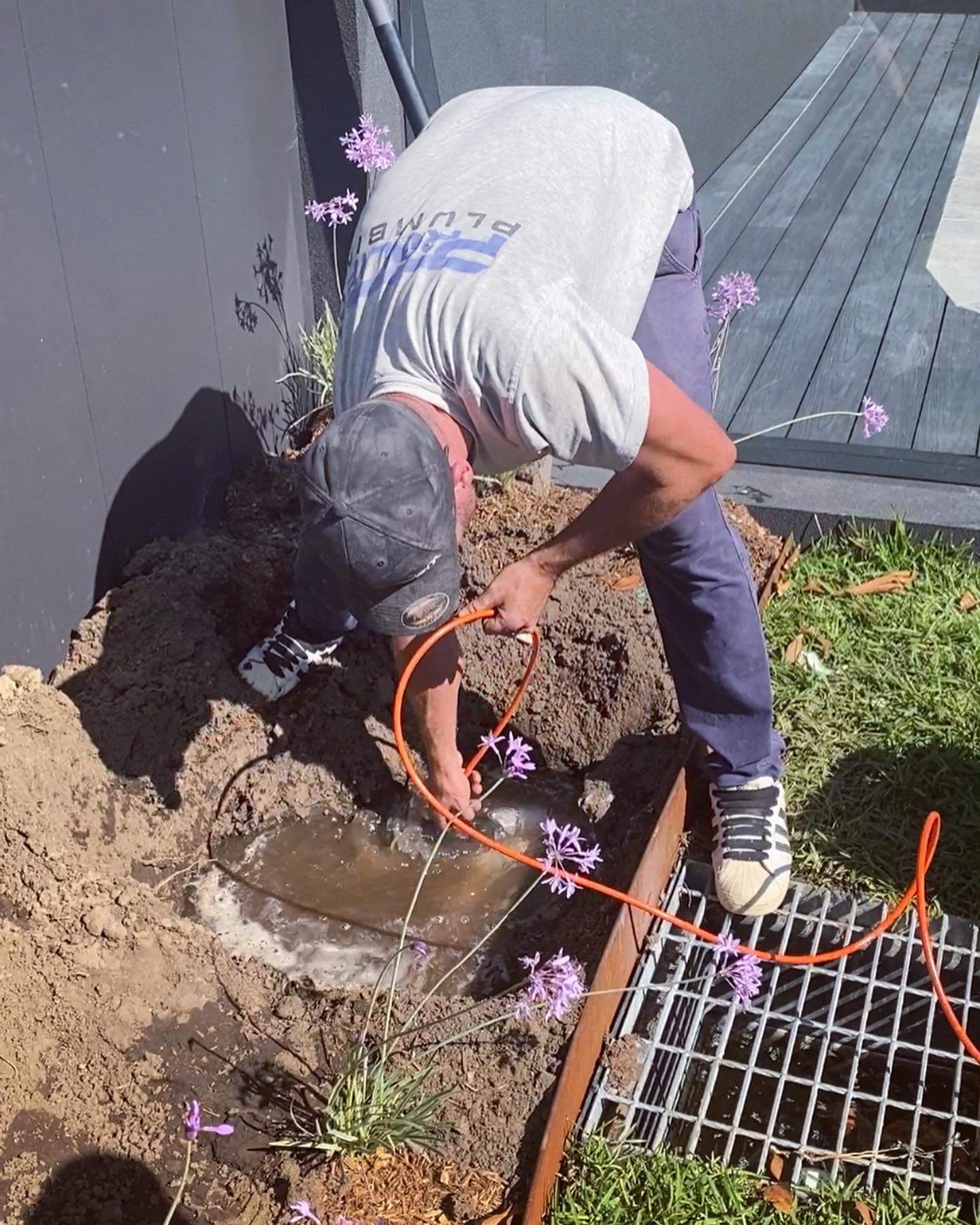
For a more complex blockage, or where there is obvious damage to the pipes, a jet blast with a piercing tip clears the line. After clearing, a camera goes down to find out why it blocked in the first place. This is the step that most other plumbers skip, and the one that matters most.
If the camera finds tree roots, the team uses cutting jetter heads specifically designed to cut roots right out of the pipe. There are different heads with different pressures that spray in different directions and cut roots out cleanly. After a full root cut, Prolific Plumbing offers a six-month warranty that the drain will not block again. But the honest advice is always given upfront: the roots are going to grow back. The only permanent fix is pipe relining or digging and replacing the damaged section. A quote for the permanent repair is always provided alongside the clearance.
Tools most homeowners would not have access to
The piece of equipment that makes the biggest difference is the jet blaster. It is a $20,000 machine. Homeowners can buy a plunger, or the roe pumps the team uses, which run around $300. You might even be able to hire an electric eel from a hire place. But jet blasting is the best and easiest way to get rid of a blockage. They are quick, they are powerful, and they can cut all the roots out.
Paired with the drain camera, the jet blaster does not just clear the blockage. It identifies the actual cause, which is what stops the same problem from coming back.
Fixed pricing and full transparency
Emma McQueen, Prolific Plumbing
Who Is Responsible for a Blocked Drain?
How can you tell if it is your problem or Sydney Water's?
Who fixes it depending on where the blockage is?
If the blockage is after the boundary trap, it is Sydney Water’s problem. Prolific Plumbing will put in a request for Sydney Water to investigate, get a reference number, and Sydney Water takes it from there. It is their responsibility to fix it.
If a homeowner has already paid for a call-out and it turns out to be Sydney Water’s issue, they can claim that cost back from Sydney Water. So there is no reason not to get it investigated. Either the problem is on your side and it gets found and fixed, or it is Sydney Water’s issue and the cost is recoverable.
Questions People Ask Before Booking a Plumber
Common concerns when deciding whether to call a plumber
Price is the most common objection. There are cheap options out there, and some people want to pay as little as possible. But cheap is not always the best. Prolific Plumbing has been called to jobs where the previous plumber had been clearing the same drain for years without ever finding the cause or offering a solution. The homeowner spent more in repeat call-outs than they would have on a proper repair.
Matthew explains everything in detail and in terms that a normal person can understand. He does not throw technical language at people. The pricing is fixed, stated upfront, and does not change without the homeowner’s approval. That transparency is what removes most of the hesitation people have about calling a plumber.
The most common questions about blocked drains
Before calling a plumber, most homeowners want to know the same things: how much will it cost, what is actually involved, and whether they really need a professional or whether they can handle it themselves. Based on what the team at Prolific Plumbing hears most often, here are the questions that come up again and again:
- How much does it cost to unblock a drain?
- Will the blockage come back after it is cleared?
- Is it something I can fix myself?
- Do you charge more for after-hours call-outs?
- Is it my drain to fix, or is it Sydney Water’s problem?
- What is a jet blast and do I actually need one?
- How long will the job take?
These questions are covered throughout this guide. For specific pricing or to get a straight answer for your situation, call Prolific Plumbing directly.
How to Prevent Blocked Drains
Based on what Prolific Plumbing sees week in and week out, these are the habits that would prevent most blocked drain call-outs:
- Never flush wipes of any kind, regardless of what the packaging says
- Do not hang fresheners inside toilet bowls, they fall in and block the pipe
- Keep bathroom doors locked if you have young children
- Never pour fat, oil, grease, rice or flour down the drain
- Remove shower hair regularly by hand rather than relying on chemical cleaners
- Get a drainage inspection when buying a property, especially an older one
Call a plumber straight away. Do not let it grow worse. As soon as you start noticing drainage problems, especially anything involving toilets or showers, get a plumber out. If you fix it first time around, you will save money. Every time someone waits, the job gets bigger, more complex and more expensive. And if it turns into an after-hours emergency, you are paying significantly more than a daytime call-out would have cost.
For drain methods and minor kitchen build-up, it is worth trying a plunger first. But if it is related to toilets and showers, just get a plumber.
Real Experience and Unique Insights
One of the worst situations Prolific Plumbing has encountered
The most unusual job the team has dealt with involved a combination of a Sydney Water blockage and a faulty reflux valve on the property. Sydney Water had a blockage in their main line. It backed up into the property and came out through the toilet inside the home.
The reason it got that far was a faulty reflux valve. Think of it as a rubber flap inside the pipe. If it is working, it lets water go one way but stops anything coming back in. This one was not closing. So when Sydney Water’s blockage backed up, instead of being stopped at the valve it flowed straight through into the house.
The property owner was responsible because it was their faulty valve on their property. Matt dug all the way down in the backyard, found the pipes, repaired the reflux valve and installed an inspection opening while he was there. The whole situation could have been avoided with a pre-purchase plumbing inspection.
What surprises homeowners most about blocked drains
Two things. The first is how quickly a blockage can develop. People assume there needs to be a big obvious cause. But often it builds gradually with very little warning.
The second is how damaging tree roots can be. Most homeowners do not realise the extent of it until they see the camera footage. Roots do not just block drainage pipes. They damage copper water supply pipes too. The photograph on Prolific Plumbing’s Instagram of a thick root that had wrapped completely around and burst a copper water main is one of the clearest examples of why underground pipes need to be checked, not assumed to be fine.
The Cost of Clearing a Blocked Drain in Sydney
What factors affect the cost?
There is no single price for clearing a blocked drain. The cost depends on several variables:
Type of blockage. A simple basin or toilet blockage that just needs a plunger or roe pump is around $300. More complex blockages requiring a jet blast and camera inspection are $760 during business hours.
Whether tree roots are present. Cutting roots out with jetter heads adds $360 to $569 on top of the jet blast.
Time of day. After-hours call-outs cost more. Last night’s jet blast and camera job, done at 8:30pm, came to $908 compared to $760 during the day.
Access. If the property has no inspection openings, the toilet has to come off just to get the jet blaster into the line. That adds the cost of removal and reinstallation.
What the camera finds. If the camera reveals a faulty reflux valve, a collapsed pipe or backfall from poor installation, those become additional repairs with their own costs.
| Service | Approx. Cost | Notes |
|---|---|---|
| Plunger or rodding (basic blockage) | ~$300 | Business hours |
| Jet blast + camera inspection | $760 | Business hours |
| Jet blast + camera (after hours) | $908+ | After-hours call-out |
| Root cutting jetter heads | +$360 to $569 | Added to jet blast cost |
| Toilet removal and reinstallation | Additional cost | Required if no inspection opening |
| Pipe relining | Quote required | Permanent fix for root damage |
| Dig and repair | Quote required | Severe or collapsed pipe damage |
The most common types of blocked drain jobs and how complex they are
Blocked drains are also the starting point for larger work. Many pipe relining and pipe replacement jobs start as a routine blocked drain call-out. The camera goes down, the actual problem is identified, and the homeowner finally understands why the same drain has been blocking every few months.
When does a blocked drain turn into a larger, more expensive repair?
Tree roots are the main escalation point. Cutting them out with a jetter provides temporary relief and a six-month warranty, but the roots will grow back. The only permanent fix is to dig up and repair that section of pipe, or to pipe reline it. Prolific Plumbing always provides a quote for the permanent repair at the same time as the clearance, so homeowners know what their options are.
The other major cost escalator is access. No inspection openings means toilet removal. Poor installation means the plumbing needs to be brought up to code. A faulty reflux valve means a dig. Each of these adds cost that would not have been necessary if a plumbing inspection had been done on the property when it was purchased.
Is it cheaper to fix a blocked drain early rather than waiting?
Every single time, yes. Fix it first time around and you will save money. The maths is straightforward. A recurring jet blast every six to twelve months adds up fast. Prolific Plumbing had a customer who had the same drain jet blasted every eight months rather than doing the repair. By the time they sold the house, all those call-outs had already cost more than the repair would have cost from day one.
And if waiting means the job becomes an after-hours emergency, you are paying $500 or more extra just for the timing. Early action, during business hours, on the first sign of a problem, is always the cheapest outcome.
It is cheaper just to call the plumber the first time.
That is not a sales line. It is what the numbers show, job after job. A $760 jet blast and camera during the day, done once, is cheaper than three emergency call-outs over two years. And a pipe reline done when roots are minor is cheaper than a full dig-up when the pipe has collapsed.
Our Reviews
We love what we do and it shows!
Have a read of some of the reviews on Google we’ve received from our customers…
Posted on Google Eva WongTrustindex verifies that the original source of the review is Google. Matthew explained the job clearly and was very thorough in completing the job. Thank you!!Posted on Google Stephen YTrustindex verifies that the original source of the review is Google. Matt was very courteous and professional and arrived promptly even when called out on a Saturday evening. Job was done quick and to a high quality, thanks so much!Posted on Google Jasper YapTrustindex verifies that the original source of the review is Google. Matt and his team came to my property to help review plumbing & sewer diagram. He was very knowledgeable and guided me on the next steps with my builder to discuss defects raised.Posted on Google Renee SmithTrustindex verifies that the original source of the review is Google. We recently had about 5 meters of sewer pipes replaced and couldn’t be happier with the service. Matt and the team were professional, efficient, and clearly knew what they were doing, while also keeping everything clean and tidy throughout the job. They were respectful, easy to communicate with, and took the time to explain the process. The work was completed to a high standard and everything is running perfectly now—highly recommend for anyone needing reliable plumbing services.Posted on Google Lewis leungTrustindex verifies that the original source of the review is Google. Nice Methew and the team did a very good job for us and gave us good recommendations to improve my water pressure .Posted on Google Paul ListerTrustindex verifies that the original source of the review is Google. Matt came out at short notice to fix a blocked drain. The service was excellent - with full transparency of the task to be done, pricing and setting expectations. I would have no hesitation to highly recommend Matt and Prolific Plumbing for your plumbing needs.Posted on Google Archie MillerTrustindex verifies that the original source of the review is Google. Matthew completed a toilet installation for me that went smoothly, and I am happy with the result. Always appreciate his professionalism and attention to detail. I would have no reservations about choosing them again.Posted on Google BeeGumTrustindex verifies that the original source of the review is Google. Great job done, even mumsy got me to review the work done, 10/10Posted on Google Elizabeth TerryTrustindex verifies that the original source of the review is Google. Quick and, professionalPosted on Google Marina KouzmenkoTrustindex verifies that the original source of the review is Google. Great job 👏 Everything done ✔️ professionally and on time Very happy 😊